A fire door inspection checks whether a fire door is correctly installed, maintained and capable of resisting the spread of fire and smoke in the event of a fire. A professional inspection will normally assess the fire door leaf, frame, hinges, gaps, seals, glazing, closers, signage and overall compliance with current fire safety legislation and guidance.
Fire doors are a critical part of a building’s passive fire protection system. They help maintain fire compartmentation, protect escape routes and provide occupants with valuable time to evacuate safely during a fire emergency. If a fire door is damaged, poorly maintained or incorrectly installed, it may fail to perform correctly when needed most.
Why Are Fire Door Inspections Important?
Fire doors are installed to slow the spread of fire and smoke throughout a building. When working correctly, they help:
- Protect escape routes
- Support evacuation procedures
- Maintain fire compartmentation
- Reduce fire and smoke spread
- Improve occupant safety
- Support legal fire safety compliance
Over time, fire doors can become damaged through general wear and tear, building alterations, poor maintenance or incorrect repairs. Even relatively minor defects can affect the overall performance of the door assembly.
Regular fire door inspections help identify issues before they become serious fire safety risks. They also help responsible persons, landlords, facilities managers and business owners maintain compliance with the Regulatory Reform (Fire Safety) Order 2005 and wider fire safety responsibilities.
What Does a Fire Door Inspection Include?
A fire door inspection involves checking multiple parts of the fire door assembly to ensure the door is functioning correctly and remains compliant with fire safety standards.
Fire Door Certification
Inspectors will usually check whether the fire door has an appropriate certification label or plug identifying the fire resistance rating, such as FD30 or FD60.
Certification helps confirm that the fire door has been tested to recognised standards and is suitable for use within the building’s fire compartmentation system.
Door Leaf Condition
The fire door leaf is inspected for:
- Damage
- Warping
- Cracks
- Holes
- Delamination
- Unauthorised alterations
The overall condition of the door is important because damage can compromise fire resistance performance.
Gaps Around the Fire Door
Correct gaps around the top and sides of the fire door are essential for maintaining fire and smoke resistance.
Inspectors will measure the gaps between the door and frame to ensure they fall within acceptable tolerances. Excessive gaps may allow smoke and fire to spread more quickly throughout the building.
Intumescent Strips and Smoke Seals
Fire doors often contain intumescent strips and smoke seals designed to expand when exposed to heat and help prevent the spread of smoke and flames.
During the inspection, seals are checked for:
- Damage
- Missing sections
- Incorrect installation
- Paint contamination
- General wear and tear
Damaged or missing seals can significantly reduce the effectiveness of the fire door.
Hinges and Fire Door Ironmongery
Fire door hinges, handles, locks, latches and other ironmongery components are inspected to ensure they are secure, suitable and functioning correctly.
The inspection may include checking:
- Number of hinges
- Fixings and screws
- Signs of wear or damage
- Compatibility of hardware
- Fire-rated components
Incorrect or non-compliant ironmongery can affect the performance of the fire door during a fire.
Fire Door Closers
Self-closing devices are essential because fire doors must fully close after use in order to provide effective fire separation.
Inspectors will check whether:
- The closer operates correctly
- The door closes fully into the frame
- The door latches properly
- The closing speed is appropriate
A fire door that fails to close properly may not provide adequate protection during a fire.
Glazing and Vision Panels
Where glazing is installed within the fire door, inspectors will assess:
- Fire-rated glazing
- Glazing beads
- Cracks or damage
- Correct installation
Improper glazing installations can weaken fire resistance and compromise compartmentation.
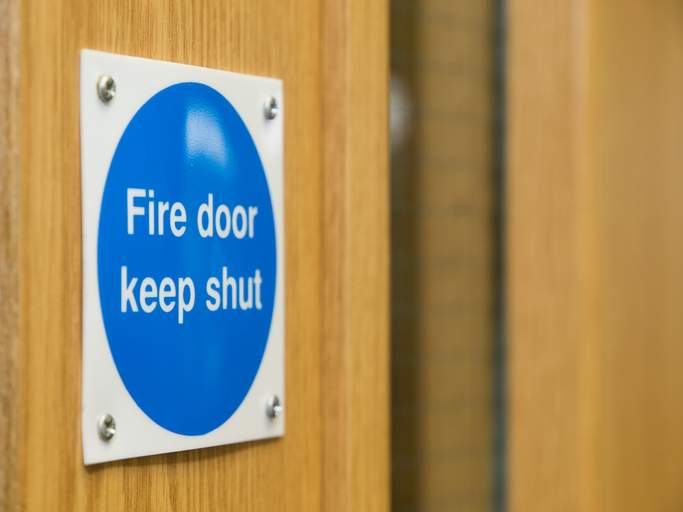
Fire Door Signage
Fire doors should display appropriate signage where required, including:
- “Fire Door Keep Shut”
- “Automatic Fire Door Keep Clear”
Signage forms part of wider fire safety management and helps ensure fire doors are used correctly throughout the building.
Frame and Surrounding Structure
The fire door frame and surrounding compartmentation may also be inspected to identify:
- Damaged frames
- Poor installation
- Failed fire stopping
- Gaps around the frame
- Compartmentation defects
Even if the fire door itself is compliant, surrounding structural issues may still reduce overall fire protection performance.
Common Fire Door Defects Found During Inspections
Some of the most common problems identified during fire door inspections include:
- Excessive gaps around doors
- Missing smoke seals
- Damaged intumescent strips
- Faulty self-closers
- Incorrect hinges or hardware
- Fire doors wedged open
- Poor maintenance
- Damaged glazing
- Doors failing to latch properly
- Unauthorised modifications
Many of these defects develop gradually over time and may go unnoticed without regular inspections and maintenance.
Which Buildings Require Fire Door Inspections?
Fire door inspections are important across a wide range of commercial, residential and public-sector buildings, including:
- Apartment blocks
- HMOs
- Offices
- Schools and universities
- Hospitals and healthcare settings
- Hotels and hospitality venues
- Warehouses and industrial premises
- Retail properties
- Mixed-use developments
The Fire Safety (England) Regulations 2022 introduced additional requirements for fire door checks within higher-risk residential buildings, increasing the importance of ongoing inspection programmes and fire safety management.
How Often Should Fire Doors Be Inspected?
Inspection frequency depends on the building type, occupancy levels and fire risk profile of the premises.
As a general guide:
- Fire doors should normally be inspected every six months
- High-traffic doors may require more frequent inspections
- Residential buildings may require routine communal door checks
- Newly occupied or recently altered buildings may benefit from additional inspections
Regular inspections form an important part of wider passive fire protection maintenance and fire safety compliance.
For additional guidance on fire safety responsibilities and residential building fire protection, organisations can refer to the UK Government fire safety guidance for residential buildings.
Professional Fire Door Inspections and Surveys
Professional fire door inspections help organisations identify fire safety risks, maintain compliance and improve overall building safety.
Pyro Fire Services provides fire door inspections and fire door surveys for commercial, residential and multi-occupancy buildings across the UK. Inspections are carried out by experienced professionals with practical knowledge of fire compartmentation, passive fire protection systems and current fire safety legislation.
For responsible persons, landlords, facilities managers and organisations responsible for maintaining safe premises, regular fire door inspections are an important part of protecting occupants, supporting evacuation procedures and maintaining ongoing fire safety compliance.
Frequently Asked Questions About Fire Door Inspections
What is the purpose of a fire door inspection?
The purpose of a fire door inspection is to ensure the fire door is capable of resisting the spread of fire and smoke and protecting escape routes within the building.
Are fire door inspections a legal requirement?
Fire safety legislation requires responsible persons to maintain fire safety measures within their premises, including fire doors where installed as part of the building’s fire protection strategy.
What is the difference between a fire door inspection and a fire door survey?
A fire door inspection usually focuses on the condition and compliance of individual doors, while a fire door survey may involve a wider assessment of multiple fire doors across the building alongside reporting and remedial recommendations.
What are the most common fire door failures?
Common failures include excessive gaps, damaged seals, faulty closers, incorrect hinges, damaged glazing and fire doors being wedged open.
If you require a fire door inspection, don’t hesitate to get in touch with us. Having inspected over 100,000 fire doors, you can guarantee that Pyro Fire’s friendly and competent surveyors will be meticulous in their approach to confirm whether your fire doors are compliant.

Erik Hudson
Managing Director – Pyro Fire Services
Starting in fire safety over 14 years ago, Erik has built Pyro Fire Services with focus on advancing fire compliance and protection. As Managing Director of Pyro Fire, Erik drives innovation across all services including fire risk assessments, fire door inspections, and passive fire protection to protect more people and property.
Erik has supported Pyro Fire through its third-party certification to the BAFE SP205 scheme, and membership with The Institute of Fire Safety Managers (IFSM), Fire Industry Association (FIA) and the National Association of Fire Door Inspectors (NAFDI).
Not sure where to start?
Speak to our teamKey accreditations
We recognise the importance of maintaining high levels of accreditation as a company, and as individuals. Our certifications include The Institute of Fire Safety Managers (IFSM), The Institution of Fire Engineers (IFE), and The Fire Industry Association (FIA). We’re third-party accredited by BAFE for Fire Risk Assessments, and our assessors are registered on the IFSM’s National Fire Risk Assessors Register.